
Resonance: A Plague Tale Legacy Resonance Story and Lore
Two thousand years of curse, sacrifice, and the family bloodline that carries the Macula's shadow.
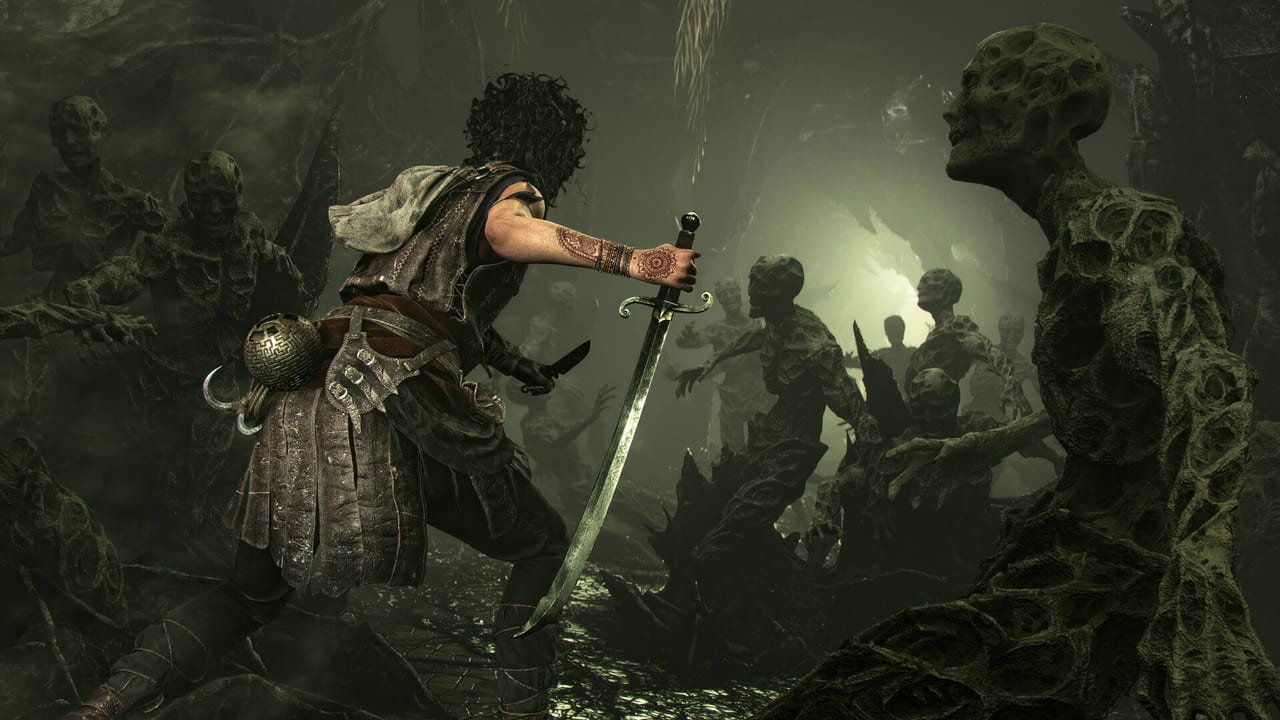
Resonance: A Plague Tale Legacy spans two timelines linked by the Macula, an ancient curse that passes through bloodlines and binds families to dark fates across generations. Sophia’s mission on Minotaur Island is not only to survive but to sever a curse that has followed her family for two millennia. Understanding the lore enriches every chapter and connects the gameplay systems — the Petrified, the Creature, the light mechanics — into a coherent mythology.
The Dual Timeline Structure
Resonance tells its story across two time periods that interleave through the campaign. The modern timeline follows Sophia arriving on Minotaur Island following the death of her father, executing a mission rooted in family obligation and dread. The ancient timeline reconstructs the original events on Crete two thousand years ago, gradually revealing what the Macula is, where it came from, and how it bound itself to Sophia’s bloodline.
The two timelines converge in Chapter 13, when the ancient history is completed and Sophia must face the consequences of what her ancestor did. This convergence is the narrative payoff of the entire game. The puzzle solutions page covers the mechanical intersections where the two timelines affect gameplay, particularly light-beam puzzles that reference the ancient Minoan architecture.
The Macula — Origin and Nature
The Macula is the central mythological concept of the game and the thing that makes Resonance a true A Plague Tale legacy title. In the game’s mythology, the Macula is a darkness that attaches to bloodlines and passes from parent to child, corrupting individuals and the world around them. It is not a disease in the conventional sense — it is more like a spiritual curse that distorts reality where the affected bloodline walks.
Origin: The Macula originated in ancient Crete, specifically tied to the Minoan civilization’s experiments with light and darkness as forces that could be weaponized or controlled. The ancient timeline shows how the Minoans discovered the Macula in deep caves and attempted to harness it, leading to catastrophic consequences.
Effects on Characters: Characters carrying the Macula experience hallucinations, attract supernatural threats like the Petrified, and pass the curse to their children. The Creature that hunts Sophia in the dark is drawn to Macula carriers specifically.
Asterion: The man at the centre of the Minotaur myth is revealed to be a Macula carrier. His name and the Minotaur monster are two sides of the same story — one the human suffering under the curse, the other the monstrous form the curse produces when left unchecked.
The Minotaur Legend — Myth and Reality
Resonance treats the Minotaur myth with the same approach the A Plague Tale series takes to historical plague lore: grounding supernatural elements in real historical circumstances while building a coherent fictional mythology on top. The labyrinth at the centre of Minotaur Island is a real structure in the game’s world, and the Minotaur that guards it is the Creature bound to the island’s curse.
The Myth: In Greek mythology, the Minotaur was a monster with a bull’s head and a human body, born from the union of Pasiphae and a sacred bull. It was housed in the Labyrinth beneath the palace of Minos at Knossos and was fed a tribute of seven youths and seven maidens every nine years until Theseus killed it.
The Game’s Version: In Resonance’s version, the Minotaur is Asterion, a man cursed by the Macula whose condition was so extreme that he became the Creature. He was imprisoned in the labyrinth not as punishment but as a containment measure — the Minoans built the labyrinth to cage the Macula’s worst manifestation. The tribute of youths was not feeding the Minotaur but was instead a ritual designed to sustain the curse’s containment through periodic human sacrifice.
Sophia’s Family Bloodline
Sophia is a descendant of the original Macula bloodline that originated in ancient Crete. The game implies that her family has carried the Macula in some form for two thousand years, with the condition surfacing differently in different generations. Her father was heavily affected, her grandfather before him. The reason Sophia was sent to the island is directly connected to her bloodline’s obligation to the curse’s containment — or to breaking it.
The Macula’s Appeal to Sophia: Unlike characters in earlier A Plague Tale games who were victims of circumstance, Sophia has a personal stake that is existential rather than circumstantial. Her mission is not just survival but the fate of her bloodline. This personal dimension elevates the stakes beyond the rat swarms and soldier encounters of previous games.
Father’s Role: Sophia’s deceased father appears through flashbacks and recorded messages throughout the game. He was researching the Macula’s origin and had made significant progress in understanding how to break the curse before his death.
The Island’s Role in the Story
Minotaur Island functions as both a physical location and a narrative device. It is the place where the Macula was originally bound, where the labyrinth was built, and where the original Minotaur was contained. Sophia coming to the island is a homecoming of sorts — she is returning to the place where her family’s curse began.
Chapters 1-4: Sophia arrives on the island following her father’s death and begins uncovering the history of the Macula through environmental storytelling in the ruins.
Chapters 5-8: The ancient timeline takes over more prominently, showing the original events that created the Minotaur and bound the Macula to the bloodline.
Chapters 9-12: The two timelines begin to merge as Sophia discovers her direct connection to the original events and the Creature becomes an active threat.
Chapter 13: The final confrontation brings everything together. Sophia must confront the Minotaur in its statue form and resolve the Macula’s hold on her bloodline.
The Light and Darkness Theme
The Minoan civilization’s experiments with light and darkness are the mythological engine of the story. The Macula represents darkness as a living force that can possess and corrupt. The light mechanics in gameplay — the lantern, the Minoan sphere, the Light Concentrate mode — are the in-world response to that darkness. The ancient people who built the labyrinth understood that light was the only defense against the Macula, and Sophia inherits that understanding as her primary survival tool.
The connection between light, the Macula, and bloodlines ties the gameplay directly to the story. Every time Sophia uses a lantern to freeze the Petrified or concentrates light to burn the Creature, she is reenacting the Minoan response to the curse that her own bloodline helped create.
Related Pages
- Combat Guide — How the Creature hunt sequences work mechanically
- Puzzle Solutions — Light-beam puzzles and the ancient Minoan architecture
- Walkthrough — Chapter-by-chapter story progression
- Trophies — Story-related trophy conditions
- Charms Tier List — Charms that affect Macula-related encounters
Frequently Asked Questions
Quick answers to the most common questions.
What is the Macula in Resonance?
The Macula is an ancient curse that passes through bloodlines, corrupting individuals and attracting supernatural threats. It originated in Minoan Crete and is the central mythological element connecting Sophia's family to the island.
Who is the Minotaur in the game?
The Minotaur is Asterion, a Macula carrier whose condition became so extreme he became the Creature. The labyrinth was built to contain him, not as punishment but as a containment measure. The tribute of youths was a ritual to sustain that containment.
What is the dual timeline structure?
The game interweaves Sophia's modern mission on Minotaur Island with events from ancient Crete two thousand years ago. The timelines converge in Chapter 13 when the full history is revealed.
Why does Sophia come to the island?
Sophia is a descendant of the original Macula bloodline that originated in Crete. She comes to the island following her father's death to either contain or break the curse that has followed her family for two millennia.
How does the Minotaur legend differ from Greek mythology?
In the game, the Minotaur is not a separate monster but a man (Asterion) transformed by the Macula. The labyrinth was a containment structure rather than a prison for a beast. The tribute of youths was a sacrifice to maintain the containment, not to feed the creature.