
Resonance: A Plague Tale Legacy Factions Hub
Who hunts, who serves, and who is bound to the Macula across two millennia of Resonance lore.
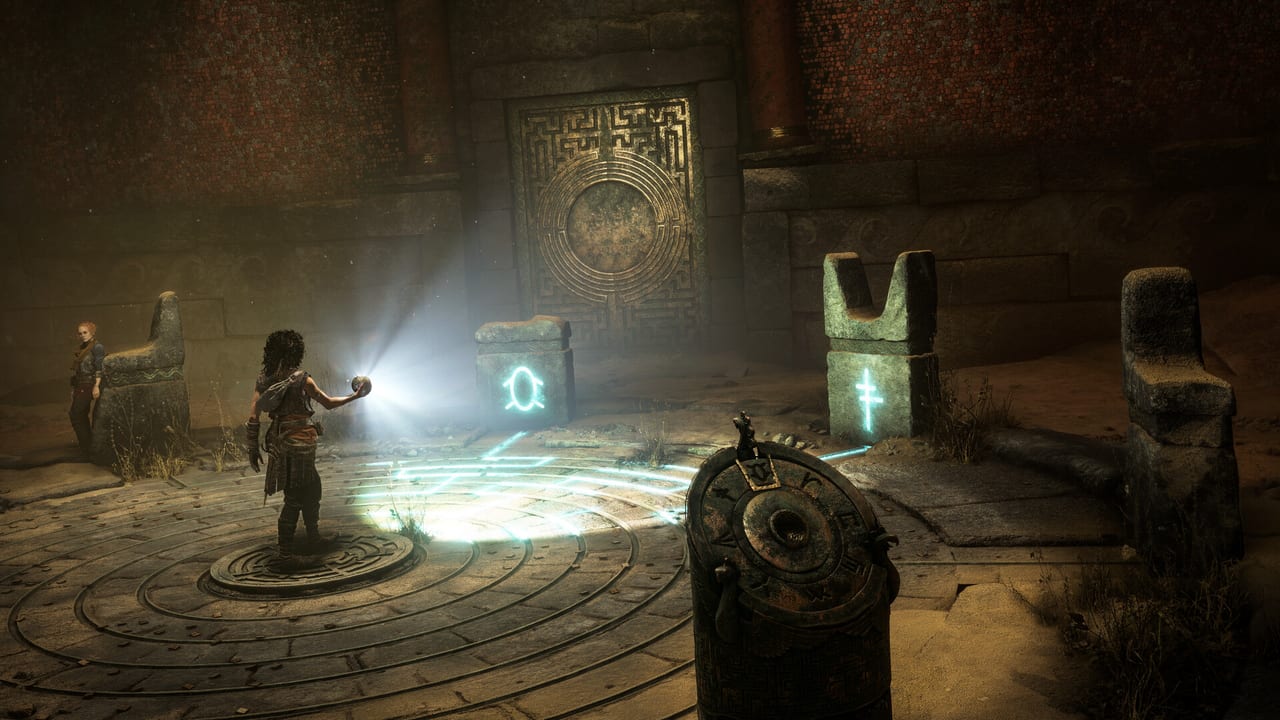
Resonance: A Plague Tale Legacy tells its story across two timelines and a dozen named groups, from Sophia’s Romani-style adoptive crew to King Minos’s Minoan court. This page is the faction guide the story and ending pages both lean on. It lists every notable group, who runs it, where it appears in the campaign, and what happens to it. The official PS5 story trailer sits at the top of the page; pair it with the Sophia and Theseus character pages if you want biographies instead of faction politics.
The factions split cleanly into two timelines. The medieval timeline (1334) is the Romani plunderers, the Order of Nuns, and the Venetian army. The ancient timeline (Minoan Crete) is the Minoan Court, the Light Engineers, and the Macula carriers across both eras. The Petrified span both timelines; they are creatures of the Macula rather than members of any faction. The bestiary page covers Petrified combat, not their lore role.
A short note on names. The game calls Sophia’s adoptive crew the Romani (or Plunderers, depending on the dialogue). The convent order is referred to in dialogue as the Order of Nuns, and in lore documents as the Order of Asterion hunters. Both names refer to the same group. The Light Engineers are Daedalus’s workshop on Crete; in 1334 they are referenced only as the builders of the sphere and the labyrinth. The names below match the in-game terminology per locale.
The Romani / Smuggler Plunderers
Members: Faro (captain after Alec’s disappearance), Irene (lieutenant, traitor), Sophia, Leni, Ezra (camp cook), Valerio (parry trainer), Lazare (camp quartermaster), and roughly a dozen unnamed crew.
Role in story: Sophia’s adoptive crew and the people who raised her after the convent. Faro leads them. Irene is his lieutenant. The crew organises the Venice carnival raid in Chapter 2, escapes with the sphere, and follows Sophia to Minotaur Island to find Alec’s last camp. They are the closest thing Resonance has to a family for Sophia, and they die in that role.
Alignment: neutral-protag. The crew is not heroic in the classical sense. They are plunderers, thieves, and survivors, but they raised Sophia when nobody else would. Faro is loyal to the end. Irene is the traitor who tips off the Venetian army and who ambushes Sophia and Faro inside the labyrinth after they activate the light machines. Sophia kills Irene. Faro is mortally wounded in the same fight and spends his last breath keeping the light beam pointed at the centre of the labyrinth. The crew’s fate is functionally extinction by Chapter 13.
Lore notes: the crew operates out of a lagoon camp that gets burned in Chapter 2. After that, the survivors live on a ship until the island expedition. The camp’s ledger is the Chapter 1 artefact; the camp’s pendant is the Heritage Pack DLC item named for Alec, Sophia’s father and the camp’s previous captain.
The Order of Nuns / Convent
Members: unnamed Mother Superior, a rotating cast of sisters, and (as a child) Sophia. The Order’s leadership is implied to be a council of senior Mothers who coordinate the Asterion hunt across centuries.
Role in story: the Order of Nuns is the convent that holds Sophia as a child, injects her with a tarry substance (a diluted Macula sample), and triggers her visions. The convent is where the campaign opens, before Sophia is rescued by Alec and Faro. After the prologue, the Order does not appear on screen again, but the post-credits scene makes their role explicit: they are part of a centuries-old hunt for Asterion’s location. The convent tar is what allows Sophia’s Macula carrier status to activate.
Alignment: antagonistic-neutral. The Order is not evil; the nuns believe they are containing the Macula and protecting the world from another Asterion. Their methods (childhood injections, convent captivity) are abusive by 1334 standards and unambiguously cruel in the game’s frame. The Order does not appear in 1334 after the prologue.
Lore notes: the Order is referred to in lore documents as the Order of Asterion hunters. The same order has tracked Macula carriers across the Mediterranean for centuries. Their failure to find Asterion on Crete is what sends the modern convent to experiment on Sophia. The full beat sheet for the convent prologue lives on ending.
King Minos’s Minoan Court
Members: King Minos (ruler of Crete, Ariadne’s father), Ariadne (Ariadne / Theseus body in dual-timeline sequences), Daedalus (court engineer, master of the labyrinth), Asterion (Minos’s son, the Minotaur of this telling), Pasiphae (Asterion’s mother, referenced in frescoes only).
Role in story: the Minoan Court is the political and military apparatus that built the labyrinth, contained Asterion, and organised the gladiatorial competitions. Minos runs the court. Ariadne is Asterion’s elder sister and the warrior who enters the arena disguised as Theseus to beg her father to end the containment ritual that is killing her brother. Daedalus built the labyrinth, the light machines, and the sphere Sophia carries in 1334. Asterion is the Minotaur.
Alignment: contested. Minos is the antagonist of the ancient timeline. He kills his own daughter Ariadne in the arena when she refuses to stop begging him. He imprisons Asterion in the labyrinth as a containment ritual. Daedalus deactivates the labyrinth’s defences in defiance after Minos kills Ariadne. With the defences down, Asterion senses his sister’s death and goes berserk, destroying the Minoan civilization. Ariadne is the tragic protagonist of the ancient timeline. Asterion is a victim, not a villain.
Lore notes: the Greek myth retold by Resonance is closer to Madama Butterfly than to a schoolbook legend. The Minotaur is a Macula carrier, not a bull hybrid. The tribute of youths was a sedation ritual, not feeding a beast. The full beat sheet for the Minoan Court lives on Theseus and story.
The Venetian Army / Italian Soldiers
Members: an unnamed captain, a rotating cast of patrician guards, line soldiers, and archers, plus the noble who hires Irene as a spy. The Venetian army in this game functions as a faction, not as a named warlord.
Role in story: the army that chases Sophia after the Venice carnival raid, burns her lagoon camp, and pursues her to Minotaur Island for the same prize. They are the melee diet for the medieval chapters: line soldiers die in one parry, archers take two, captains take four or five and shield. They appear in Chapters 2, 3, and as a recurring presence in the island chapters. They are not interested in the Macula; they want the sphere.
Alignment: antagonistic. The Venetian army is the most uniform enemy faction in the game. They are not evil in lore terms, but they are the obstacle between Sophia and the island. Their commander is never named; their orders trace back to whoever hired Irene to spy on the plunderers.
Lore notes: the army uses early-14th-century Italian arms and armour. Their captain model is reused for the Chapter 9 Captain arena fight. After the island expedition, the army’s fate is left open; they presumably take their wounded back to Venice.
The Petrified
Members: the Petrified are not a faction in the political sense; they are creatures spawned by the Macula. There are roughly four variants (Stalker, Bloater, Brute, and Crawler), plus a unique Captain-of-the-Petrified that appears in Chapter 9.
Role in story: the Petrified are the human-shaped Macula-corrupted husks that swarm Sophia in dark corridors and ruin chambers. They are not sentient. They are drawn to Macula carriers specifically. The lantern and the Minoan sphere freeze or burn them. The Petrified appear in every chapter from Chapter 3 onward, with density spikes in Chapters 4, 5, 9, and 11.
Alignment: ambient threat. The Petrified are enemies, not characters. They have no dialogue, no faction politics, and no fate beyond what Sophia’s light tools do to them.
Lore notes: the Petrified are explained in bestiary and combat. Lore-wise, they are what happens when the Macula passes through a human body that was not a Macula carrier: the body corrupts, the mind empties, and the husk hunts whatever the Macula wants it to hunt. The Captain-of-the-Petrified is a unique enemy with sword and shield verbs; it is the Petrified variant with the highest threat density.
The Macula Carriers
Members: the Macula bloodline across both timelines. Asterion is the ancient carrier. Sophia is the 1334 carrier. The convent tar that nuns injected into Sophia is a diluted Macula sample, which is what activates her carrier status. The Macula returns in a new carrier roughly every eight hundred years; Requiem already teased a much later hospital birth.
Role in story: the Macula carriers are the people the curse attaches to. They experience visions, attract supernatural threats like the Petrified and the Creature, and pass the curse to their children if they survive long enough. Sophia’s visions map onto the Minoan past because her bloodline is the same bloodline as Asterion and Ariadne. The Creature that hunts Sophia in the dark is drawn to her specifically because she is a carrier.
Alignment: tragic. Carriers are not villains; they are people cursed with a spiritual wound that produces monsters around them. Asterion, Ariadne, and Sophia are all carriers. The Macula is the wound, not the carrier’s will.
Lore notes: the Carrier and Protector cycle is mentioned in ending and story. The convent tar that triggers Sophia’s carrier status is the in-game explanation for why a child raised by plunderers has visions of Minoan Crete. The Creature is bound to the island’s curse, not to Sophia personally; a different carrier would attract the same Creature.
The Light Engineers
Members: Daedalus (founder and master engineer), an unnamed workshop of assistants and apprentices who appear as fresco figures only, and (in 1334) Sophia and Leni as the only living people who can operate the Minoan light machines.
Role in story: the Light Engineers are Daedalus’s Minoan faction. They designed and built the labyrinth, its light machines, the sphere, the prism mechanisms, and the stained-glass puzzles Sophia solves across the campaign. After Minos kills Ariadne, Daedalus deactivates the labyrinth’s defences in defiance. With the defences down, Asterion breaks free and the Minoan civilization collapses. The Light Engineers do not survive the collapse; their machines do.
Alignment: tragic-protagonist in the ancient timeline, infrastructure in the 1334 timeline. Daedalus is the closest thing the ancient timeline has to a hero. His machines are the only thing keeping the Macula contained. His choice to deactivate the defences after Ariadne’s death is the inciting incident for the Minoan collapse.
Lore notes: the Light Engineers are referenced in puzzles and Theseus. In 1334, the only Light Engineer alive is Sophia, who operates Daedalus’s machines with the sphere. The sphere is the key that the Venice carnival raid was stealing; it is also the key to the light machines on Minotaur Island. Without the sphere, Sophia cannot activate the machines that destroy the Macula tendrils.
How factions interact
The campaign’s central tension is between three faction systems. The Romani plunderers want the island’s treasure. The Venetian army wants the same treasure. The Macula wants a carrier, and Sophia is the carrier. The Minoan machines that can contain the Macula are scattered across the island, and only the sphere can activate them. Sophia’s choice to chase the machines instead of the treasure is what makes her a carrier who is also a Protector.
In the ancient timeline, the central tension is between Minos, his court, and the Light Engineers. Minos imprisons Asterion in the labyrinth as containment. Ariadne enters the arena disguised as Theseus to beg Minos to end the ritual. Minos kills her. Daedalus deactivates the defences. Asterion breaks free and destroys the Minoan civilization. The full beat sheet is on ending and story.
In the post-credits scene, Sophia is telling the island’s story to Amicia. The Order of Nuns is revealed to be part of the centuries-old hunt for Asterion. The Macula returns in a new carrier roughly every eight hundred years. The sting does not announce a numbered sequel; it frames Sophia’s island as the story she owed Amicia and leaves the door open for both a future Carrier tale and more of Sophia’s sea years.
How this page connects to the rest of the wiki
- Story — the Macula curse, Asterion and the Minotaur legend, and Ariadne posing as Theseus.
- Ending — full spoilers for the traitor reveal, the Minotaur finale, and the post-credits scene.
- Sophia — character page for the carrier and Protector.
- Theseus — character page for Ariadne in the ancient timeline.
- Leni — character page for Sophia’s partner on the island.
- Companions — Faro, Irene, Alec, and the rest of the Romani crew.
- Bestiary — the Petrified, the Creature, and the soldiers in the way.
- Combat — parry, kick, dodge, lantern, and grapple verbs.
- Puzzles — Daedalus’s sphere and light machines.
- Walkthrough — chapter-by-chapter story beats.
Frequently Asked Questions
Quick answers to the most common questions.
Who is the traitor who tips off Venice?
Irene, Faro's lieutenant. She is the traitor who tips off the Venetian army in Chapter 2 and who ambushes Sophia and Faro inside the labyrinth after they activate the light machines. Sophia kills her. Faro is mortally wounded in the same fight and dies holding the light beam pointed at the centre.
What happened to Faro?
Faro is killed by the Creature in the final labyrinth ambush. He is mortally wounded defending the light beam after Irene's ambush and spends his last breath keeping the beam pointed at the centre of the labyrinth. He is not the traitor; he is the ally who dies holding the line.
Who is Asterion in the game's lore?
Asterion is Ariadne's brother, Minoan prince, and the Minotaur of this telling. He is a Prima Macula carrier. King Minos imprisoned him inside the labyrinth as containment. When the containment ritual failed, Asterion destroyed the Minoan civilization.
Who kills Ariadne in the arena?
King Minos, her own father, kills her in the arena when she refuses to stop begging him to end the containment ritual. Daedalus, in defiance, plunges the arena into darkness by deactivating the labyrinth's defences. Asterion then senses his sister's death and goes berserk.
What is the Order of Nuns doing in the story?
The Order of Nuns is the convent that holds Sophia as a child, injects her with a tarry substance (a diluted Macula sample), and triggers her visions. They are part of a centuries-old hunt for Asterion's location. The post-credits scene makes their role explicit.
What does Daedalus do in the campaign?
Daedalus built the labyrinth, its light machines, and the sphere Sophia carries in 1334. He deactivates the labyrinth's defences in defiance after Minos kills Ariadne, which lets Asterion break free and ends the Minoan civilization.
Are the Petrified a faction or creatures?
Creatures, not a faction. They are Macula-corrupted husks with no sentience. They are drawn to Macula carriers specifically. There are roughly four variants (Stalker, Bloater, Brute, Crawler), plus a unique Captain-of-the-Petrified in Chapter 9.
Who is the Macula carrier in 1334?
Sophia. The convent tar that nuns injected into her as a child is a diluted Macula sample, which activates her carrier status. The Creature that hunts her in the dark is drawn to her because she is a carrier.
Do the Romani plunderers survive the campaign?
Functionally, no. The lagoon camp is burned in Chapter 2. Irene betrays the crew. Faro dies in the final labyrinth ambush. The surviving crew's fate is left open; they presumably sail away after the island expedition, but the campaign treats the Romani faction as effectively extinct by Chapter 13.
What do the Venetian soldiers want?
The sphere, not the Macula. The Venetian army chases Sophia for the same prize the Romani plunderers want: the Minoan sphere and whatever else is on the island. Their captain is never named; their orders trace back to whoever hired Irene to spy on the plunderers.