
Resonance: A Plague Tale Legacy Accessibility Guide
Asobo's most accessible Plague Tale yet — settings, hardware, and the things the pause menu does not label.
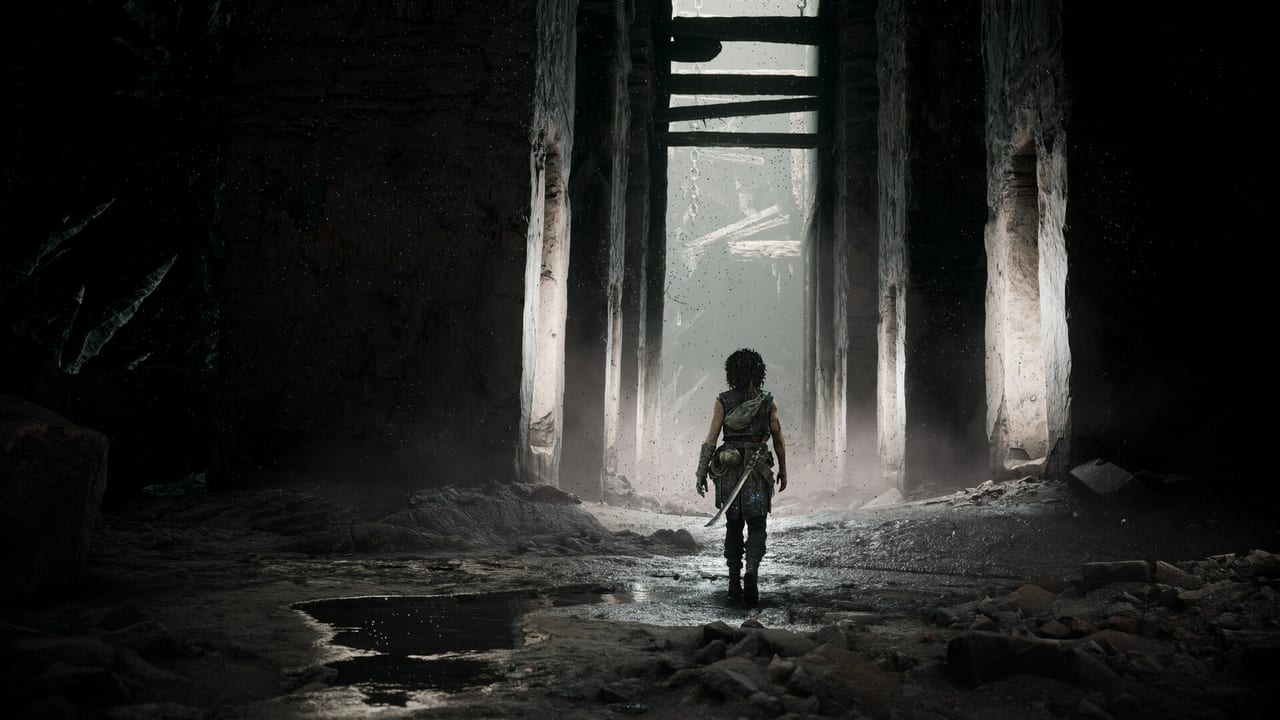
Resonance: A Plague Tale Legacy is Asobo’s most accessibility-forward Plague Tale to date. The settings menu is built around the assumption that players want to tune the game to their own comfort, not pick a difficulty and forget it. This page lists every accessibility setting confirmed at launch, what each one does, where to find it in the pause menu, and what it does not do. The PC review embedded above covers accessibility in its verdict; pair it with the controls and performance pages if you want the full picture.
Difficulty is adjustable at any time from the pause menu. There is no hidden easy mode and no New Game+ requirement to lower the challenge. Combat asks for a parry or a dodge; accessibility does not auto-parry for you. It lowers the cost of a missed tap. If red attacks are still a wall, the combat page has timing windows.
The settings menu lives under System / Accessibility on PC and under Settings / Accessibility on console. Most options have a preview pane on the right side of the screen; turn them on, see the change, confirm, and back out. Settings persist per profile, not per save slot.
Difficulty and pacing
Difficulty is a single slider with five named positions: Story, Casual, Standard, Hard, and Custom. Story makes combat trivial and lowers puzzle timer pressure. Casual softens the timing windows but keeps the puzzles intact. Standard is the developer-tuned baseline. Hard makes every red attack one frame tighter. Custom exposes individual sliders for enemy aggression, parry window length, puzzle timer length, and lantern fuel drain. All five positions let you pause the game, lower the difficulty, and continue from the same moment without a checkpoint reload.
Asobo confirmed in interviews that the parry window on Casual is wider than on Standard but that the timing still has to be deliberate. There is no “auto-parry” toggle. There is also no “press X to win” difficulty mode, because that would defeat the game’s design. What you can do is remove the dodge cooldown refund on a successful parry, remove the stamina drain on hold-parry, and lower enemy aggression so that only one enemy attacks at a time.
If you finish the campaign on Story and want trophies, trophies does not gate achievements on difficulty. Like a Warrior (165 Resonance Points) and Superstitious (30 Charms) can both be done on Story.
Subtitles and captions
Subtitles cover all spoken dialogue in full. There is no abbreviation. Every line Sophia says, every line a crew member says, every line a Minoan-era character says in the dual-timeline sequences, is captioned. Ambient captions also exist: footsteps, door creaks, sphere hum, lantern flicker, Petrified howls, and the Creature’s breathing are all captioned as on-screen text. The font is large enough to read on a 4K TV from a couch.
Options under the Subtitles submenu include: speaker name toggle (default on), size (small, medium, large), background opacity (none, low, medium, high), and text colour (white, yellow, cyan, magenta). The yellow option is the colour-blind safe preset. The text colour option also applies to ambient captions.
Closed captions for cutscenes are separate. They are on by default. They can be turned off in the same submenu. The game does not have audio description tracks.
Color blind alternatives
Three presets exist: Deuteranopia, Protanopia, and Tritanopia. Each one recolours the game’s threat indicators and charm highlights so that the colour cue does not depend on red-green discrimination. Red attacks (the parryable ones) are recoloured to a high-contrast orange. Petrified corruption is recoloured to a dark purple. Charm highlights are recoloured to a bright cyan. The presets are stackable with the difficulty Custom slider, so a deuteranopia player on Custom can have all three at once.
The game does not have an option to upload a custom palette. Asobo’s reasoning in interviews was that the three presets cover the most common forms of colour vision deficiency and that a custom palette risked people picking bad combinations.
Camera comfort
The camera options live in a submenu called Camera. Options include: motion sickness reduction (default off), camera shake intensity (off, low, medium, high), camera follow distance (close, normal, far), camera inversion (X axis, Y axis, both), and FOV (60, 70, 80, 90, 100). The motion sickness toggle reduces the camera sway that triggers during lantern chases, sphere puzzles, and the Creature’s appearances. It does not remove the camera entirely; it reduces the rotational speed and amplitude by about 60 percent.
Camera shake intensity off removes all shake on hit, on parry, on dodge, and on the Creature’s roar. It does not remove the screen flash on red attacks; that flash is a colour cue, not a camera cue.
FOV up to 100 is the equivalent of a wide camera for players who feel claustrophobic at the default 70. The setting does not change aim sensitivity. The setting does not affect cutscene framing; cutscenes use a fixed FOV.
Audio mix and custom volumes
The audio submenu has a master volume, separate sliders for music, dialogue, ambient, and effects, and a toggle for dynamic range compression. The compression toggle is the equivalent of a night mode: it raises quiet sounds and lowers loud sounds so that a player using speakers at low volume can still hear footsteps and dialogue without explosions being deafening. The compression toggle is on by default on console and off by default on PC.
There is no separate slider for the Petrified howl, the Creature’s roar, or the sphere hum. Those are part of the effects channel.
The game supports 3D Audio on PS5 and Spatial Audio on Xbox Series. On PC, the audio device is selectable from the system menu; the game does not have a separate audio device picker.
Button remapping
Full button remapping is available on controller and on keyboard. The controls submenu exposes every combat action, every traversal action, every UI action, and every accessibility action. There is no preset for Sekiro, Souls, or Batman Arkham. Players who want those presets have to set them by hand.
There are two important constraints. Parry cannot be bound to the same key or button as interact. Kick cannot be bound to the same key or button as jump if a jump binding exists. These constraints exist to prevent the soft-locks that happen when a player presses a single button and the game cannot tell whether the intent is “parry an attack” or “loot a body.”
The game does not expose gyro aim. The game does not have motion controls. The game does not have a separate “left-handed” button layout, because the combat verbs are symmetric on the default layout. Players who want a left-handed layout can mirror the camera inversion settings and remap dodge to the left trigger.
Playable without some timed inputs
Asobo confirmed in pre-launch interviews that Resonance is designed to be playable without some timed inputs. The parry window on Casual is one frame wider than on Standard. The dodge cooldown refund on a successful parry can be removed in the Custom slider. The light-concentrate minigame can be set to hold-to-keep-open instead of tap-to-keep-open in the same slider. The puzzle timer in the Chapter 5 four-room gauntlet can be removed entirely.
What the game does not do is auto-complete any of those inputs. The player still has to press the button at the right time; the game just gives them more time to press it.
Toggle for hold-to-aim vs press-to-aim
Aim mode is selectable. Hold-to-aim means you hold the aim button to bring up the sphere reticle and release to drop it. Press-to-aim means you press the aim button to bring up the reticle and press again to drop it. Hold-to-aim is the default for controller; press-to-aim is the default for keyboard. The toggle is in the controls submenu.
The aim mode toggle also affects the grapple. On hold-to-grapple, you hold the grapple button to extend the rope and release to fire. On press-to-grapple, you press to extend, press again to fire.
HDR toggle on Steam
HDR is supported on Windows 10 and Windows 11 with HDR displays. The toggle is in the video submenu. The game ships with three HDR presets: SDR-equivalent (off), HDR1000 (bright reference), and HDR400 (dim reference). HDR400 is the safer preset for budget HDR panels. HDR1000 is the safer preset for OLED and high-nit reference displays. The HDR toggle does not affect SDR rendering; turning HDR off reverts to the SDR tone-map.
The game does not have a brightness slider. Asobo’s reasoning in interviews was that the tone-map is calibrated and a brightness slider would let players crush the shadow detail that the Minoan ruins depend on for atmosphere.
Controller vs keyboard and mouse
Asobo recommends a controller. Steam lists Xbox, DualShock (USB), and DualSense. Mouse and keyboard work. Parry timing is easier with a trigger than with a mouse click. Steam Deck is Playable, not Verified, because the dual-timeline chapters tax the engine; the performance page has the breakdown.
The controller layout is symmetric by default. Players who want to put kick on a paddle and parry on a trigger can do so. Players who want to put sphere on a face button and grapple on a shoulder can do so. The layout is fully remappable; the only constraints are the parry-vs-interact and kick-vs-jump guards mentioned above.
Screen reader notes
The game has a partial screen-reader implementation. Menu items are read aloud on Windows Narrator and on NVDA. In-game subtitles are read by the system screen reader. The game does not have a self-voicing layer; if you turn off system speech, the menu items do not speak on their own.
There is no screen reader for the in-world exploration. The game does not announce charm density, blade locations, or puzzle solutions through audio cues beyond the existing ambient captions. If a player is fully blind, the game is not currently accessible end-to-end. Asobo has signalled in interviews that this is an area they want to expand in a future title.
Motion sickness options
The motion sickness toggle in the Camera submenu is the main switch. It reduces camera sway during lantern chases, sphere puzzles, and Creature appearances. The toggle does not remove camera shake on hit; that is a separate slider.
Other motion-relevant settings: camera follow distance (far reduces perceived speed), FOV (lower FOV reduces perceived speed), and a toggle for vignette during damage (off by default, can be set to on to reduce the screen-edge blur that some players find nausea-inducing).
The game does not have a teleport-movement option. Movement is a third-person follow camera. The camera follow distance setting is the closest equivalent to a wide camera for motion-sensitive players.
Language support: EN/FR/DE/ES full audio
Full audio support means voiced dialogue, voiced cutscenes, voiced ambient captions, and menu navigation. The four full-audio languages are English, French, German, and Spanish. Text-only languages include: Brazilian Portuguese, Polish, Russian (text only, no audio), Simplified Chinese, Traditional Chinese, Japanese, Korean, Italian, Arabic, and Turkish. Asobo has confirmed that more languages may be added in patches.
Subtitles are translated into every supported language, including the text-only ones. The ambient captions are translated into every supported language. The font for CJK languages is a separate typeface tuned for screen legibility; the Latin font is the same across all locales.
Voice actors are credited in the pause menu under Audio / Cast. There is no option to swap voice actors between languages.
Quick reference table
| Setting | Where | Default | Effect |
|---|---|---|---|
| Difficulty | Gameplay / Difficulty | Standard | Five presets plus Custom |
| Subtitles | Accessibility / Subtitles | On | Full dialogue + ambient captions |
| Speaker names | Accessibility / Subtitles | On | Names before dialogue |
| Color blind | Accessibility / Color | Off | Three presets |
| Motion sickness | Accessibility / Camera | Off | Reduces camera sway |
| Camera shake | Accessibility / Camera | Medium | Off, low, medium, high |
| FOV | Accessibility / Camera | 70 | 60, 70, 80, 90, 100 |
| Audio compression | Audio / Mix | Off on PC, On on console | Night mode equivalent |
| Button remap | Controls / Remap | Default | Full remap with guards |
| Aim mode | Controls / Aim | Hold on pad, Press on KB+M | Toggle in submenu |
| HDR | Video / HDR | Off | Three HDR presets |
| Language | System / Language | English | EN/FR/DE/ES full audio |
How this page connects to the rest of the wiki
- Controls — the default button layout and remap constraints.
- Performance — Steam Deck, HDR, frame rate, and the dual-timeline chapters.
- System requirements — what hardware you need for the HDR presets.
- Combat — parry timing, dodge windows, and the Custom slider.
- Walkthrough — the chapter-by-chapter story beats.
- Trophies — achievements and whether they gate on difficulty.
- Heritage Pack — the pendant and the ninth blade, both accessible from the start.
- Reviews — the PC review that flagged accessibility as a positive.
- Chapters — the chapter list, useful for tracking which chapter needs what setting.
Frequently Asked Questions
Quick answers to the most common questions.
Can I change difficulty mid-game?
Yes. Difficulty is a single slider under Gameplay / Difficulty, and you can change it at any time from the pause menu. There is no checkpoint reload. Five presets plus Custom. Story, Casual, Standard, Hard, Custom. Custom exposes enemy aggression, parry window length, puzzle timer length, and lantern fuel drain as separate sliders.
Are subtitles available in all languages?
Yes. Subtitles cover all spoken dialogue in full, including the dual-timeline Minoan sequences. Speaker names, size, background opacity, and text colour are all toggleable. Text-only languages include the full set listed in the Language section.
Is there an auto-parry mode?
No. The game does not auto-parry. The Casual preset widens the parry window by one frame and removes the dodge cooldown refund on a successful parry. The Custom slider lets you turn those off independently. The player still has to press the button at the right time.
Does Resonance support HDR on PC?
Yes, on Windows 10 and Windows 11 with HDR displays. Three HDR presets ship: SDR-equivalent, HDR1000 (bright reference), and HDR400 (dim reference). The toggle is in the Video submenu. There is no brightness slider.
Can I remap the controls?
Yes, full button remapping on controller and on keyboard. Two constraints: parry cannot be bound to the same input as interact, and kick cannot be bound to the same input as jump. No Sekiro or Souls preset ships in the box; players who want those presets set them by hand.
Does the game have a screen reader?
Partial. Menu items are read by Windows Narrator and NVDA. In-game subtitles are read by the system screen reader. There is no self-voicing layer. The game does not announce charm density, blade locations, or puzzle solutions through audio cues beyond the existing ambient captions.
Are there motion sickness options?
Yes. The motion sickness toggle in the Camera submenu reduces camera sway during lantern chases, sphere puzzles, and Creature appearances. Camera shake intensity, FOV, camera follow distance, and the vignette toggle are all separate sliders.
Which languages have full audio?
English, French, German, Spanish. Text-only languages include Brazilian Portuguese, Polish, Russian (text only), Simplified Chinese, Traditional Chinese, Japanese, Korean, Italian, Arabic, and Turkish.
Is there a hold-to-aim vs press-to-aim toggle?
Yes. The aim mode toggle is in the controls submenu. Hold is default on controller; press is default on keyboard and mouse. The toggle also affects the grapple, switching it between hold-to-extend and press-to-extend.
Is the game playable on Steam Deck?
Yes, Playable, not Verified. The dual-timeline chapters tax the engine and the default layout may need community adjustments. The performance page has the full breakdown.