
Resonance: A Plague Tale Legacy Echoes of the Past in Resonance
Sophia's convent prologue, the Minoan past, and the dual-timeline mechanic verified against IGN and Wikipedia.
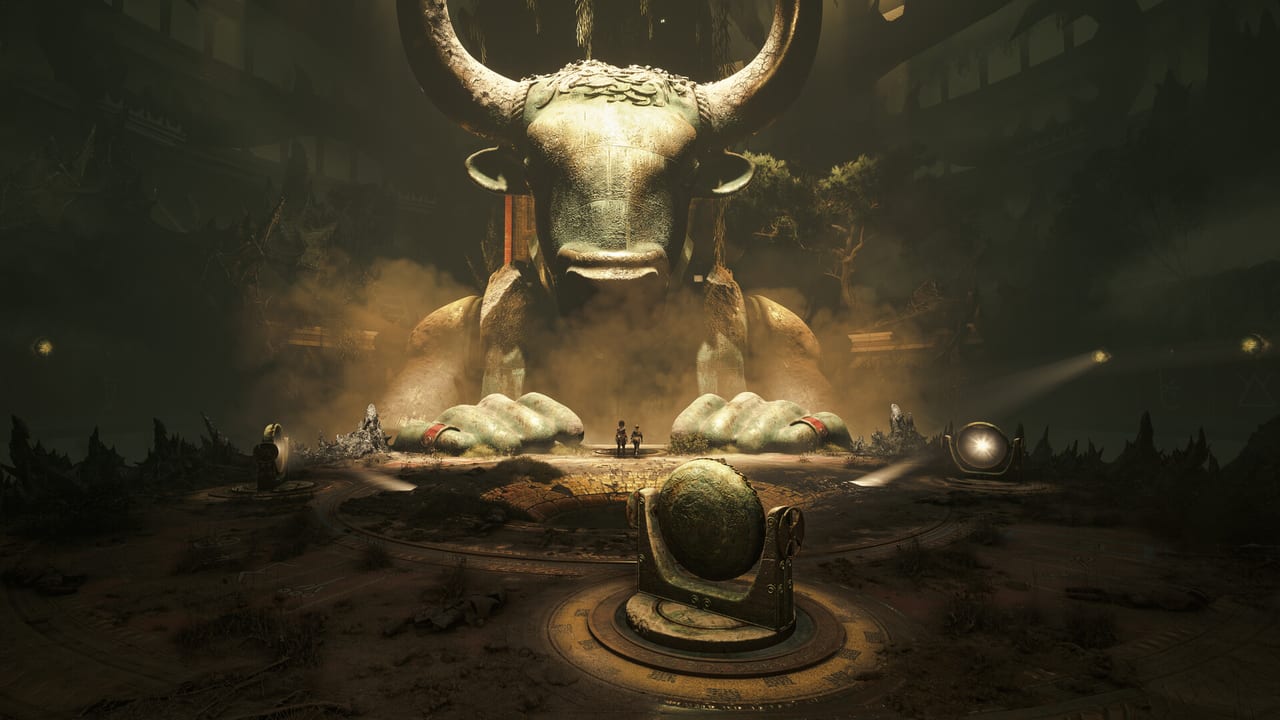
Resonance: A Plague Tale Legacy runs on a dual-timeline structure that ties Sophia’s 1334 island mission to a Minoan past two thousand years older. The “Echoes of the Past” trailer that Focus Entertainment released with the August 27, 2026 launch is the cleanest single-piece overview of how the two timelines braid together. This page unpacks the timeline, the convent prologue, the Ariadne-as-Theseus reveal, and the chapters where the dual-timeline mechanism actually changes the rooms Sophia walks through in 1334.
The dual timeline is not a photo mode toggle. It is the story backbone: when Sophia acts in 1334, the sphere (the Minoan orb recovered from Venice) opens visions of a Minoan-era Minoan path that the player’s body-on-screen changes from Sophia to Ariadne. The lore coverage lives on story; the trophy checklist for the in-game collectible trail sits on Theseus’s Echoes; the chapter-level routing lives on chapters.
The two timelines, side by side
The campaign splits its time between a 1334 Mediterranean run and a Minoan past centred on the labyrinth at Knossos. The Wikipedia plot summary and the IGN per-chapter walkthrough agree on the structure.
| Timeline | Year | Body on screen | Location | Engine feel |
|---|---|---|---|---|
| Present (Sophia’s run) | 1334 | Sophia of Athens | Venice (Ch 2), Minotaur Island, Crete (Ch 3–14) | Standard melee, lanterns, sphere beam |
| Past (Minoan flashback) | ~1300 BC | Ariadne (often labelled as Theseus) | Palace of Knossos, the original labyrinth | Same verbs, parry + sphere; combat rewards are limited |
The dual-timeline mechanic was telegraphed at the announcement: developer David Dedeine told GamesRadar in June 2026 that Resonance “changes everything” about the series, with the dual timeline as the structural pivot. Eurogamer and GameSpot both confirmed the Ariadne reveal in their launch coverage.
The convent prologue — what Sophia actually remembers
The campaign opens with a Sophia childhood cutscene in the convent. She is shown as a girl, experimented on by nuns who inject a black tar into her arm. After the injection she begins to have visions of a Greek warrior standing in front of a pair of large doors and of a sun-bleached island. The nuns force her to draw what she sees. Her father Alec raids the convent with his bandit army and rescues her.
The Macula bloodline mechanic is set up here. The convent is a branch of the same Order that experiments on Hugo de Rune fifteen years later in Innocence. The shared organisation is what allows the Prima Macula to move between the two storylines across generations. The convent prologue is roughly 5–8 minutes long on a fresh playthrough, and it sits before Chapter 1’s Blood Ties sequence.
The trailer compresses this into a montage. The campaign spends longer on it than the trailer suggests because the visions of the doors are not just a memory — they are the prompt that drives the sphere mechanic Sophia inherits in 1334. The sphere’s beam and prism modes are the gameplay result of the convent’s tar injection.
Ariadne-as-Theseus — the past body
The “warrior standing in front of large doors” from Sophia’s convent visions is Ariadne, the older sister of Asterion (the Prima Macula carrier the series eventually labels the Minotaur). King Minos imprisons Asterion in the labyrinth; the gladiatorial tribute is a containment ritual. To save her brother, Ariadne enters Minos’s gladiatorial arena posing as a male warrior — the figure the in-game Charms type list calls “Theseus” or “Theseus’s Echoes.” She begs her father to end Asterion’s suffering instead of using him as a pretext for bloodsport. Minos kills her.
Daedalus, the labyrinth’s myth-engineer, deactivates the temple’s defences in defiance after Ariadne’s death. Asterion senses his sister’s death and breaks free, ending Minoan civilisation. Sophia inherits the aftermath of this failure two thousand years later, in 1334, when Asterion’s body — fully merged with the Prima Macula — is the Macula-rooted horror the Sisters of the Order spent centuries trying to locate.
This is the dual-timeline reveal that the Echoes of the Past trailer builds to. The trailer’s voice-over pivots from Sophia’s voice to Ariadne’s voice without a visible body swap, which is how the campaign teaches the player to listen for the change. The bowl scenes, called Theseus’s Echoes, are the audio cue.
Chapter-by-chapter dual-timeline flags
IGN’s walkthrough flags eight chapters as containing a dual-timeline element. The list below combines those flags with the chapters where Sophia’s visions change the room layout she returns to in 1334.
| Chapter | Dual-timeline element | Body on screen | Effect on 1334 |
|---|---|---|---|
| 3 — Those Before Us | Brief out-of-body vision of a Minoan parade at the end of the chapter | Sophia walking a parade route | Cosmetic only; teaches the verb language |
| 4 — From Hell It Rose | Short vision of an ancient Minoan soldier in the corridors | Sophia walking | Cosmetic; setup for Chapter 5 onward |
| 5 — Desolation It Wrought | Vision at the central pedestal, then a Theseus arena combat sequence | Sophia → Ariadne | The arena combat is the first time the player controls the Minoan-era verbs under arena pressure |
| 7 — Death It Sowed | Theseus vision inside the ruined arena; the perspective shifts to a sideways overhead view | Sophia slides down, then Ariadne appears on chained platforms | Cosmetic; adds the Kouros Puppet artefact |
| 8 — Resonance | The entire chapter is the dual-timeline prologue | Sophia’s convent memory + Ariadne at the labyrinth centre | Repositions the player before the mid-game combat escalation |
| 11 — Patera | The Ariadne / Minos duel in the Temple of Light | Ariadne | Combat verbs change; Ariadne fights Minos with Theseus’s verbs |
| 13 — As One | Ariadne’s voice is the dual-timeline presence for the entire chapter | Sophia with Ariadne voice-over | Ariadne tells Sophia when to pull the statue head down with grapples |
The fight against the Minotaur statue in Chapter 13 is the dual-timeline climax. Sophia fights her way into the centre, holds the sphere in Light Concentrate against Asterion’s Macula-merged heart, and pulls the statue’s head down with grapples. Daedalus’s 1300 BC betrayal echoes in 1334 as Sophia tells Amicia the full story in the post-credits scene.
What the trailer shows but the campaign does not
Three things in the Echoes of the Past trailer are storytelling shorthand rather than direct in-game footage:
- The Minoan parade. The trailer shows Sophia-as-vision walking through a Minoan parade with crowds. In the campaign the parade is a brief out-of-body walk at the end of Chapter 3; there are no crowds of NPCs.
- The princess reveal. The trailer frames Ariadne as a royal Minoan princess, with the throne and the headdress visible. In the campaign the Ariadne body is not visible to the player; the Theseus vision runs from Sophia’s body and the past action is audio and combat-driven.
- The duel framing. The trailer cuts between Sophia parrying an enemy and Ariadne facing Minos, treating them as mirror images. In the campaign the Minos duel is the Chapter 11 set piece and is only playable in the past body for that one fight; there is no live mirroring during the 1334 fights.
These differences do not contradict the trailer. They are the trailer’s way of fitting the campaign’s seven dual-timeline chapters into a 90-second cut. The campaign itself is denser in lore and slower in pacing, which is why the “Echoes of the Past” trailer sits alongside the per-chapter walkthroughs instead of replacing them.
How this page connects to the rest of the wiki
- Story and lore — the Minoan myth, the Macula bloodline, and the Prima Macula’s Minoan origin.
- Theseus’s Echoes — the five Pierced Coin charms and the ceremonial bowls that play the Ariadne audio.
- Theseus — the lore deep dive on who Ariadne is and why the past body is labelled Theseus.
- Chapter walkthrough — the per-chapter routing with collectible counts and dual-timeline flags.
- Plague Tale Universe — how Resonance sits between Innocence (1348) and Requiem (1349).
- Ending explained — full spoilers for Chapters 11–14, the Ariadne vs Minos fight, the Minotaur statue climax, and the post-credits scene.
The Echoes of the Past trailer and the campaign together make a single argument: Resonance is not a stealth plague sequel with a new lead. It is a story about inheritance, ritual, and what happens when the same Macula acts on two different bodies two thousand years apart. Sophia carries the Macula. Ariadne died refusing to weaponise it. The labryrinth is the long shadow of that refusal.
Frequently Asked Questions
Quick answers to the most common questions.
What is the dual timeline in Resonance?
The campaign splits between Sophia's 1334 Mediterranean mission to Minotaur Island and a Minoan past two thousand years older, where Ariadne poses as Theseus in King Minos's gladiatorial arena. The sphere mechanic Sophia inherits from the convent visions is the gameplay link between the two.
Are Sophia and Ariadne the same person?
No. Sophia is a 14-year-old Greek plunderer in 1334. Ariadne is Asterion's older sister in ~1300 BC, who dies in the arena. They share a Macula connection: the same bloodline's carrier strain across two thousand years, plus the convent's tar injection on Sophia as a child.
Why does the in-game label say Theseus?
Ariadne enters the arena posing as a male warrior to reach her brother. The Charms type list labels her past body as Theseus, which is why some Charm pages say Theseus' Visions while the trophies say Theseus's Echoes. Both names refer to the same five ceremonial bowls.
Which chapters have dual-timeline sequences?
Chapters 3, 4, 5, 7, 8, 11, and 13 contain a dual-timeline element. Chapter 8 is the only story-only chapter and is the full dual-timeline prologue. Chapter 11, Patera, is the Ariadne vs Minos duel.
Does the Echoes of the Past trailer show actual gameplay?
It mixes in-engine cinematic footage with storytelling montages. The Minoan parade and the princess reveal are storytelling shortcuts; the parry-and-kick combat language and the sphere beam are real in-game verbs.
Is Asterion the Minotaur in Resonance?
Yes. Asterion is the Minoan prince and Prima Macula carrier imprisoned by his father King Minos inside the labyrinth. The campaign confirms Asterion and the Minotaur as the same person; the Bestiary and Story pages cover the full arc.
What is the sphere Sophia uses?
It is the mechanical orb she recovers from Venice in Chapter 2. It is the gameplay result of the convent's tar injection. It unlocks beam mode (Chapter 2), coloured beam mode (Chapter 5), and Light Concentrate mode (Chapter 11).
Why does Sophia tell her story to Amicia in the post-credits scene?
It is the chronological seam to A Plague Tale: Requiem. Sophia is the older Greek captain from Requiem's Île de la Cité chapters, and her younger years are the campaign the player just finished. The post-credits scene is the explicit callback to Requiem's own post-credits tease.