
Resonance: A Plague Tale Legacy HDR Calibration Guide
How to use Resonance's HDR midpoint slider on OLED, QD-OLED, Mini-LED and edge-lit panels, plus the in-game HDR toggle and tone-mapping details.
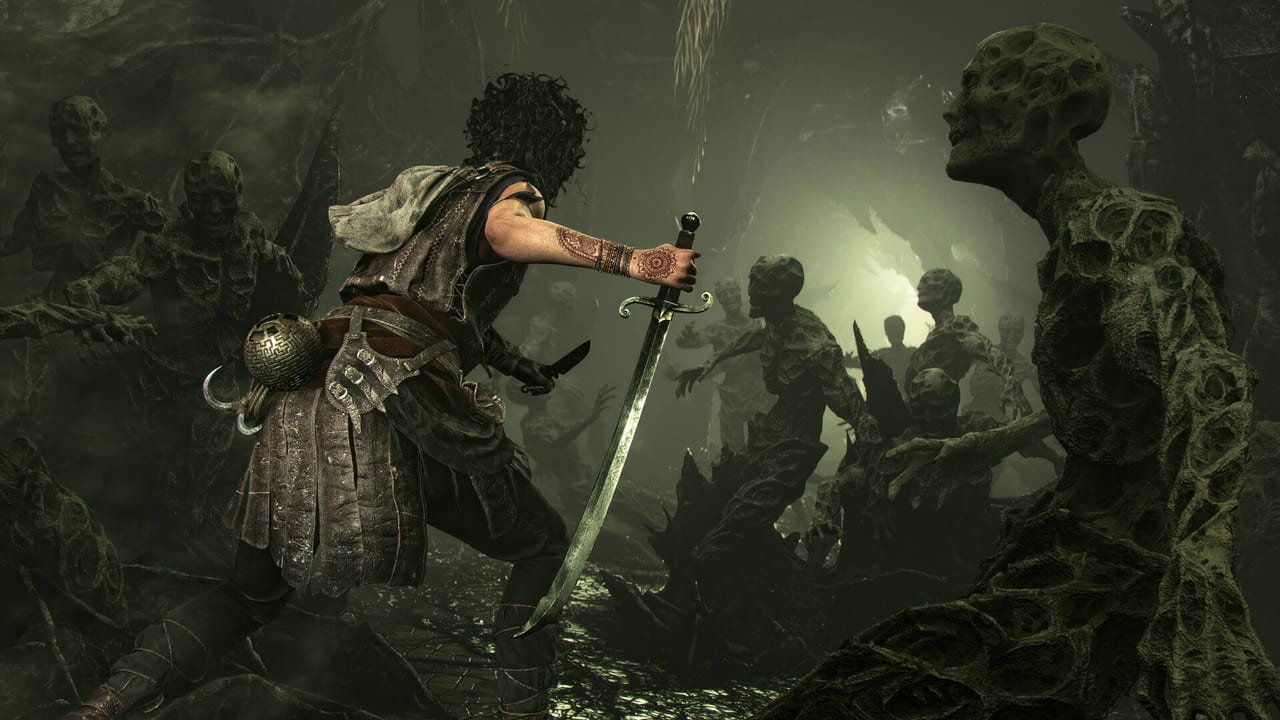
Resonance: A Plague Tale Legacy ships with HDR10 support on PC and PS5, and HDR10 + Dolby Vision Gaming on Xbox Series X. The in-game HDR implementation has two parts: a global HDR toggle in Settings → Display, and an HDR midpoint slider that lets you calibrate the tone-mapping for your specific panel. Get the toggle right and most of the image is correct. Get the slider wrong and the game is either washed out (slider too low) or crushed to black in shadows (slider too high). This page is a per-panel-type calibration walkthrough.
What the HDR toggle does
The HDR toggle is in Settings → Display → HDR. Three options:
- Off — SDR output, 8-bit per channel, sRGB color space. The HDR pipeline is bypassed entirely. The game renders to a 1000-nit reference and tone-maps to sRGB internally.
- On — HDR10 output, 10-bit per channel, Rec. 2020 color space with Rec. 709 primaries. The game renders to a 4000-nit reference and lets the panel’s tone-mapper handle the highlights. This is the recommended option for HDR-capable panels.
- Auto — Windows Auto HDR on PC, or platform-level HDR on PS5 and Xbox. The game outputs SDR and the OS upscales to HDR. This is the lowest-quality path; use only if you cannot enable HDR globally.
The recommended option for any HDR-capable display is On. Auto HDR introduces banding in dark caves and the few sun-lit outdoor sequences in Chapters 6 and 8 look flat. The toggle difference is small but visible on every panel type listed below.
What the HDR midpoint slider does
The HDR midpoint slider is in Settings → Display → HDR Calibration. It ranges from 0 (dark) to 100 (bright), default 50. It is a tone-mapping curve parameter, not a brightness control. The internal reference is 4000 nits; the slider sets the midpoint of the curve where the game transitions from its own tone-mapping to the panel’s native dynamic range.
The practical effect:
- Slider 0–30: the curve crushes mid-tones and lifts blacks. Shadow detail in the catacombs in Chapter 7 disappears. Highlights are flat.
- Slider 30–45: shadows are correct on edge-lit and IPS panels, but OLED panels show crushed blacks.
- Slider 50 (default): correct on most panels for SDR-mastered content, but slightly under-bright for HDR reference content.
- Slider 55–65: correct on OLED and QD-OLED for HDR-mastered content.
- Slider 65–80: correct on Mini-LED with high peak brightness (1000+ nits).
- Slider 80–100: blown-out highlights, washed colors. Not correct for any panel.
The slider is a per-user preference that depends on panel type, peak brightness, and the ABL (Auto Brightness Limiter) behavior of your display. The recommended starting points per panel type are below.
Per-panel calibration
OLED (LG C2/C3/C4, Panasonic LZ2000, Sony A95L)
OLED panels typically have 700–900 nit peak brightness, perfect blacks, and an ABL that dims the panel in full-screen bright content.
- Slider: 55–60
- Peak nits target: 800 n- Tone-mapping target: HDR reference with PQ curve.
- Test scenes: Chapter 6 (Crete outdoor sun), Chapter 8 (Vienna palace interior). The candle glow on Sophia’s face in Chapter 1 is the calibration reference: at the correct slider, the candle highlights are bright orange-yellow (not white), the skin tones are not crushed, and the dark room behind her still shows doorframe detail.
OLED-specific note: ABL will dim the panel during full-screen bright content. The chapter transitions (white fade) trigger ABL. If the screen looks dimmer during a cutscene than during gameplay, that is ABL, not a slider error.
QD-OLED (Samsung S95B, Alienware AW3423DW, MSI MPG 271QRX)
QD-OLED panels have higher peak brightness than WOLED (1000–1500 nits sustained, 2000+ peak on smaller highlights) and pure blacks via the quantum dot layer.
- Slider: 60–65
- Peak nits target: 1200
- Tone-mapping target: HDR reference with PQ curve.
- Test scenes: the same as OLED, plus the Chapter 8 palace ballroom with chandeliers. QD-OLED holds the chandelier highlights without ABL dimming, which is the visual confirmation that the slider is correct.
QD-OLED-specific note: the quantum dot layer adds saturation. The in-game color saturation slider (Settings → Display → Color Saturation, default 50) should be left at 50 on QD-OLED and lowered to 40 on WOLED. Resonance does not push saturation hard, so this is a small adjustment.
Mini-LED (Samsung QN90B, TCL X10, Hisense U8K)
Mini-LED panels have 1000–2000 nit peak brightness depending on the number of dimming zones. Local dimming behavior varies by zone count.
- Slider: 65–75
- Peak nits target: 1500
- Tone-mapping target: HDR reference with PQ curve, but tuned higher because Mini-LED does not have OLED’s per-pixel contrast.
- Test scenes: Chapter 8 palace ballroom chandeliers, Chapter 9 torchlit cavern with mixed bright and dark. Mini-LED blooming (halos around bright objects on dark backgrounds) is the failure mode to watch for. If the chandeliers have halos in the dark ceiling, lower the local dimming or the slider.
Mini-LED-specific note: if your panel has local dimming zones (most 2023+ Mini-LEDs do), set the local dimming to High in your TV/monitor OSD, not Low or Off. Resonance’s HDR has small bright objects on dark backgrounds (candles, torches, sparks from the Light Sphere) and these are the bloom test. Low or Off local dimming will hide the issue but produce washed-out contrast.
Edge-lit LED (LG UR/UQ series, Sony X85K, budget monitors)
Edge-lit LED panels have 400–700 nit peak brightness and no per-pixel contrast.
- Slider: 40–50
- Peak nits target: 500
- Tone-mapping target: SDR-like, with a soft HDR curve. The game still outputs HDR10 but the panel cannot reproduce the highlights.
- Test scenes: the Chapter 7 catacombs with the lantern Sophia carries. If the lantern bloom looks like a white blob with no detail, lower the slider. If the catacomb walls look flat grey, raise the slider.
Edge-lit LED-specific note: on edge-lit panels without local dimming, HDR is a small visual upgrade over SDR. The visual difference is in the candle glow and the sky in outdoor scenes, not in the overall contrast. If the image looks wrong, the answer is usually SDR (toggle off HDR), not slider adjustment.
IPS LCD with HDR400 (most HDR400-certified monitors)
HDR400 monitors technically meet the VESA HDR400 spec but are SDR panels with a slight brightness boost.
- Slider: 30–40
- Peak nits target: 400
- Tone-mapping target: SDR with a brightness boost. The HDR toggle on HDR400 monitors usually produces a worse image than SDR. The recommendation is to leave the HDR toggle Off on these panels.
Dolby Vision Gaming (Xbox Series X)
Xbox Series X supports Dolby Vision Gaming for Resonance. The in-game HDR toggle becomes irrelevant because the Xbox always outputs Dolby Vision if the panel supports it.
- Slider: the in-game slider is bypassed on Dolby Vision; the panel’s Dolby Vision implementation does the tone-mapping.
- Dolby Vision mode: set the TV to Dolby Vision Bright (or DV Dark for night-game preference). The Dolby Vision Gaming implementation on Xbox uses the TV’s mode.
Dolby Vision-specific note: not all Dolby Vision panels have Dolby Vision Gaming. Older LG OLEDs (2018–2020) need a firmware update. If the toggle does not appear in the Xbox display settings, the panel does not support DV Gaming, and the Xbox will fall back to HDR10.
In-game settings that interact with HDR
A few non-HDR settings affect the HDR image:
- Brightness (Settings → Display → Brightness): SDR brightness only. Has no effect in HDR mode. Leave at 50.
- Contrast (Settings → Display → Contrast): SDR contrast only. Has no effect in HDR mode. Leave at 50.
- Color Saturation (Settings → Display → Color Saturation): affects both SDR and HDR. Default 50 is correct.
- Vignette (Settings → Display → Vignette): affects both SDR and HDR. Default On. Disable if it bothers you, but it does not affect HDR calibration.
- Film Grain (Settings → Display → Film Grain): affects both SDR and HDR. Default Light. The grain layer is added before tone-mapping, so it shows in HDR correctly.
- Lens Flare (Settings → Display → Lens Flare): affects both SDR and HDR. Default On.
These are all separate from the HDR calibration. Adjust HDR first, then come back to these.
Quick start per platform
- PC with OLED or QD-OLED: HDR On, slider 55–65.
- PC with Mini-LED: HDR On, slider 65–75.
- PC with edge-lit LED or HDR400: HDR Off (recommended).
- PS5 with HDR10: HDR On, slider per panel type.
- Xbox Series X with HDR10: HDR On, slider per panel type.
- Xbox Series X with Dolby Vision Gaming: in-game slider bypassed; set TV to Dolby Vision Bright or Dark.
What this page covers next
- Best settings — for DLSS 4.5, FSR 4, frame generation, and AA choices that affect overall image.
- Crossplay — if your HDR image looks correct on one platform but wrong on another, the platform-level HDR pipeline is the variable.
- Photo mode — photo mode respects the HDR toggle and slider, so calibrating first improves photo mode output.
Frequently Asked Questions
Quick answers to the most common questions.
What is the HDR midpoint slider?
A tone-mapping curve parameter, not a brightness control. The internal HDR reference is 4000 nits; the slider sets the midpoint of the curve where the game transitions from its own tone-mapping to the panel's native dynamic range. Range 0–100, default 50, panel-dependent.
What slider value is best on OLED?
55–60. The candle-on-Sophia's-face test in Chapter 1 is the calibration reference: candle highlights should be orange-yellow (not white), skin tones not crushed, dark room behind her should still show doorframe detail.
What slider value is best on QD-OLED?
60–65. QD-OLED has higher peak brightness than WOLED (1000–1500 nits). The Chapter 8 chandelier test is the visual confirmation; QD-OLED should hold the chandelier highlights without ABL dimming.
What slider value is best on Mini-LED?
65–75. Mini-LED does not have OLED's per-pixel contrast, so the slider sits higher. Set the local dimming to High in your TV OSD; Low or Off will produce washed-out contrast with the candle and torch scenes.
What slider value is best on edge-lit LED?
40–50. Edge-lit LED panels have no per-pixel contrast. If the HDR image looks wrong, the answer is usually to turn HDR Off, not to adjust the slider. HDR is a small upgrade over SDR on edge-lit panels.
Should HDR be on or off on an HDR400 monitor?
Off. HDR400 monitors technically meet the VESA HDR400 spec but are SDR panels with a slight brightness boost. The HDR toggle on these monitors usually produces a worse image than SDR.
Does Resonance support Dolby Vision Gaming?
Yes, on Xbox Series X. The in-game HDR slider is bypassed in Dolby Vision mode; the TV's Dolby Vision implementation does the tone-mapping. Set the TV to Dolby Vision Bright or DV Dark.
Does the brightness slider affect HDR?
No. The brightness and contrast sliders in Settings → Display are SDR-only and have no effect in HDR mode. Leave them at 50. The HDR calibration is a separate slider.
Where is the HDR calibration slider?
Settings → Display → HDR Calibration. The HDR toggle is one level up, in Settings → Display → HDR.