
Resonance: A Plague Tale Legacy Resonance in the Plague Tale Universe
Where Sophia's prequel sits between Innocence (1348) and Requiem (1349), and what changes for the series.
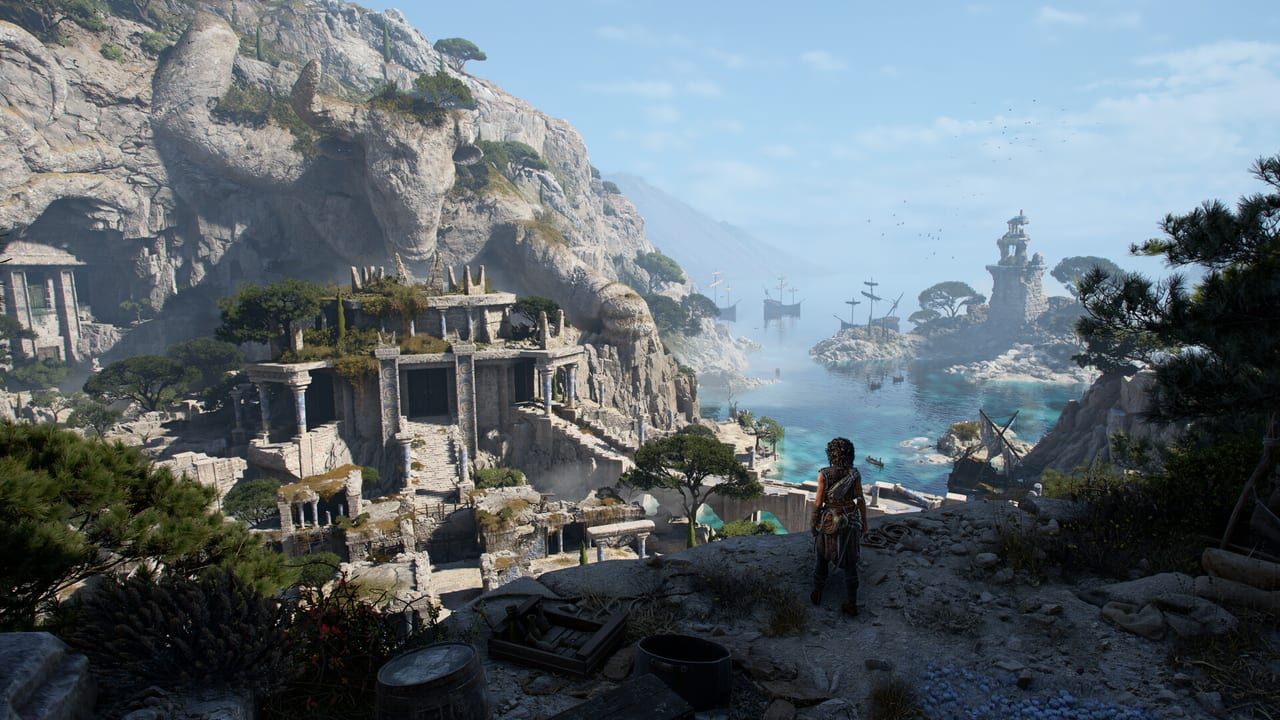
Resonance: A Plague Tale Legacy is a 2026 prequel set fifteen years before A Plague Tale: Innocence. It does not follow Amicia and Hugo de Rune. It follows Sophia, the Greek plunderer who later sails into A Plague Tale: Requiem (2022). This page is the cross-game map: who is who, where the Macula threads run, and how the three games connect without spoiling any of them. The story page covers Resonance’s own lore; this page covers how it sits inside the larger trilogy.
The three games in release order
| Game | Year | Setting | Lead | Engine | Macula focus |
|---|---|---|---|---|---|
| A Plague Tale: Innocence | 2019 | 1348, southern France | Amicia de Rune and Hugo | Asobo internal | Hugo carries the Prima Macula’s descendant strain |
| A Plague Tale: Requiem | 2022 | 1349, southern France and Île de la Cité | Amicia de Rune | Asobo internal (Zouna predecessor) | Hugo’s Macula blooms and the carrier line stabilises |
| Resonance: A Plague Tale Legacy | 2026 | 1333–1334, Mediterranean (Venice, Crete) | Sophia of Athens (with Ariadne/Theseus flashbacks) | Zouna | The Prima Macula’s origin on Minoan Crete |
Resonance is a prequel that takes the series backward in time but forward in lore. The original 2019 engine powered Innocence and Requiem. Resonance runs on Zouna, the same engine that powers Microsoft Flight Simulator 2024 and the rebuild of A Plague Tale for current-gen hardware. Zouna is also the engine used to rebuild A Plague Tale: Innocence for the 2026 anniversary release that runs alongside Resonance on PC and console.
The Macula timeline across the three games
The Prima Macula is the oldest curse in the series. Resonance places its origin on Minoan Crete. Innocence and Requiem inherit it through a bloodline that has carried the strain for two thousand years. The trilogy reads in reverse chronological order of Macula activation:
Minoan Crete, ~1300 BC (Resonance). Asterion, Minoan prince and Prima Macula carrier, is imprisoned by his father King Minos inside the labyrinth. The gladiatorial tribute is a containment ritual. When the ritual fails, Asterion breaks free and destroys Minoan civilization. The Sisters of the Order who later run the convent in Innocence are part of a chain that began with the Minoan engineers.
1348, southern France (Innocence). Hugo de Rune is born carrying the modern strain of the Prima Macula. The Order of the Inquisition pursues him. Amicia and Hugo flee through plague-stricken Aquitaine. The Macula is the supernatural thread that drives the rats and the supernatural enemies.
1349, Île de la Cité (Requiem). Hugo’s Macula blooms. Sophia, now the captain of a Greek pirate ship, is on a parallel mission. The Prima Macula’s centuries-long arc reaches its modern climax.
The chronological reading order for the lore, not the release order, is Resonance → Innocence → Requiem. The release order is Innocence → Requiem → Resonance. Asobo designed the campaign to be playable in either direction: Resonance’s body-on-screen cast is Sophia in 1334, but the dual-timeline sequences belong to Ariadne in Minoan Crete, and the post-credits scene makes the time-line ambiguity explicit.
Where Sophia comes from
Sophia of Athens is the lead of Resonance. In Requiem (2022), she is the captain of a Greek pirate ship that intercepts Amicia and Hugo on the Île de la Cité and later allies with them. In Resonance (2026), she is fifteen years younger, a Greek plunderer nicknamed Sea Scorpion in later lore. Her 1334 mission to Minotaur Island sets the events that explain her later appearance on the Île de la Cité in 1349.
Resonance also fills in what Innocence only hinted at: Sophia’s father, Alec, was a plunderer-camp captain who led an earlier expedition to Minotaur Island and did not return. His research trail is what Sophia follows in 1334. His death is what sends her and Leni to the island after the Venice raid. The Heritage Pack DLC pendant is named Alec’s Pendant in his memory; it is a flavour item, not a stat boost.
The convent in Innocence, where Hugo and other carriers are experimented on, is a branch of the same Order that experimented on Sophia as a child. The tar the nuns inject is a diluted Macula sample, which is why Sophia’s visions map onto the Minoan past and why Hugo’s Macula blooms the way it does. The two games are not parallel stories; they are the same bloodline’s Macula acting out across generations.
Who is and who is not in Resonance
Resonance does not feature Amicia, Hugo, Lucas, or the Inquisition army as on-screen cast. They are not the weekly story beats. The Macula is the connective tissue, but it acts through Sophia’s lineage, not through the de Rune line directly.
Characters who appear or are referenced:
- Sophia — playable lead. Younger Greek plunderer Sea Scorpion.
- Leni — Sophia’s partner on the island. Referred to in Requiem’s cast list as the woman who later joins Sophia’s crew.
- Faro — Alec’s ally and later captain. A combat tutorial in Resonance; a story problem by the Venice chapter.
- Alec — Sophia’s father. Already dead by the time of Resonance; his research trail drives the plot.
- Irene — Faro’s lieutenant and the traitor who tips off the Venetian army.
- Ezra and Valerio — early tutorial characters.
- Daedalus — the myth engineer whose light machines Sophia solves.
- Asterion / Ariadne — the Minoan past playable pair in the dual-timeline sequences.
The legacy Plague Tale cast (Amicia, Hugo, Lucas, Sophia the elder) is referenced in lore entries and in the post-credits scene. The post-credits scene of Resonance shows Sophia telling her story to Amicia, which is the direct connection point to Requiem. Watch the credits if you want the chronological seam between the two games.
What changes for the series
Three things change because of Resonance. First, the Macula is no longer a medieval French curse — it is a Minoan curse with two thousand years of inheritance. Second, Sophia is no longer a side character in Requiem; she is a lead whose younger years the player can play through. Third, the engine move from the 2019 Asobo engine to Zouna is the bridge from the PS4 / Xbox One generation to the PS5 / Xbox Series / PC generation.
If you have played Innocence and Requiem and you start Resonance, expect a different feel. There are no rat swarms. There is no stealth-primary combat. Sophia is the playable single-player lead, and the combat verbs are parry, kick, dagger charge, and sphere beam. The rats return in name only (the Carriers, the Corrupted, and the Petrified replace them). The light-mechanic theme is the same; the execution is not.
If you have not played Innocence or Requiem and you start Resonance, expect a standalone prequel. The Macula is explained in-game. The dual-timeline mechanic is explained in-game. The convent prologue is a Sophia-only memory, not a recap of Hugo’s chapters. You can play the trilogy in any order, but the chronological Macula thread runs Resonance → Innocence → Requiem.
How this page connects to the rest of the wiki
- Story and lore — the Minoan myth, the Macula, and Sophia’s family bloodline as told in Resonance itself.
- Characters hub — Sophia, Leni, Theseus, Faro, and the rest of the in-game cast.
- Theseus’s Echoes — the five Pierced Coin charms that act as the in-game Macula timeline breadcrumbs.
- Ending explained — the post-credits scene and the seam to Requiem.
- Official links — storefronts for Resonance, Innocence, and Requiem.
- Updates hub — the 2026 anniversary release of Innocence that runs on Zouna alongside Resonance.
Frequently Asked Questions
Quick answers to the most common questions.
Do I need to play Innocence and Requiem before Resonance?
No. Asobo pitched Resonance as a standalone prequel. The Macula is explained in-game. The post-credits scene with Amicia lands emotionally whether or not you have played Requiem, but it lands harder if you have.
In what order should I play the three games for the Macula story?
Chronologically, Resonance (1333–1334) → Innocence (1348) → Requiem (1349). For maximum story impact, play in release order: Innocence → Requiem → Resonance. The dual-timeline mechanic works either way because the Minoan past is treated as a separate body of lore.
Is Sophia the same character from Requiem?
Yes. Resonance is set fifteen years before Innocence. The Sophia you meet here is the Sea Scorpion captain that Amicia encounters in Requiem's Île de la Cité chapters. Anna Demetriou performs her in both games.
Does Resonance feature Amicia or Hugo at all?
Only in the post-credits scene, where Sophia tells her story to Amicia. The bulk of the campaign is Sophia's 1334 mission on Minotaur Island, with Minoan past sequences featuring Ariadne.
What engine does Resonance run on?
Zouna, the same engine that powers Microsoft Flight Simulator 2024 and the 2026 anniversary rebuild of A Plague Tale: Innocence. Innocence and Requiem (2019, 2022) ran on the older Asobo engine.
Is there a fourth Plague Tale game planned?
Asobo Studio and Focus Entertainment have not announced a fourth game. Resonance is described in the August 27, 2026 launch press kit as a standalone prequel. If a fourth game is announced, it will appear on the updates hub and on this page.
Why does the Macula feel different between games?
The Macula is the same curse across all three games, but its expression changes. In Innocence and Requiem it manifests as rats, plague, and supernatural enemies. In Resonance it manifests as the Petrified, the Creature (Asterion in Macula form), and the Sisters of the Order. The common thread is the Prima Macula and the carrier bloodline.
Does the convent appear in all three games?
The Order runs the convent in Innocence, the experimentation that creates Hugo's strain. The same Order experimented on Sophia as a child in the prologue of Resonance. The convent is not a physical location that appears in all three games, but the Order is the same organisation across all three.